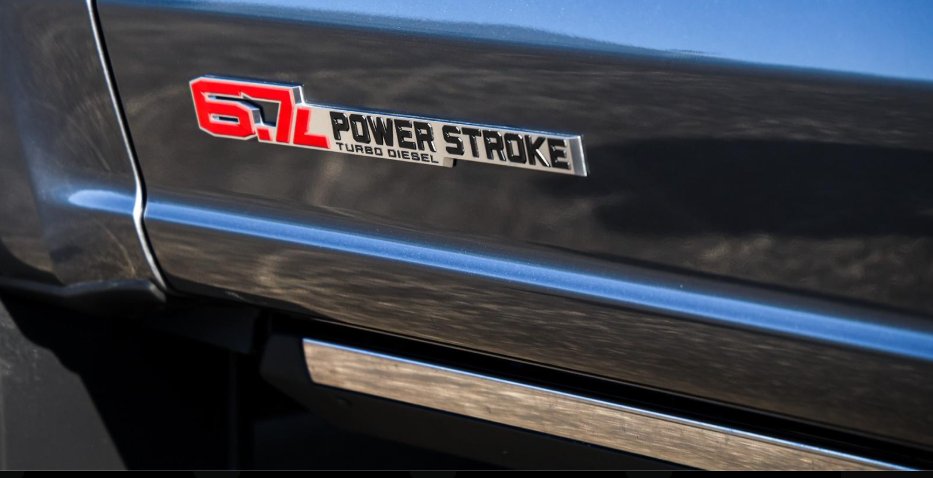
Is the 6.7L Power Stroke a reliable engine?
The 6.7-litre Power Stroke fitted to Ford F-250 and F-350 trucks is a strong performer for towing, and later model years addressed several early reliability concerns. It's still a complex, high-output diesel with modern emissions equipment, and a handful of faults come up often enough in our workshop to be worth knowing about.
The most common 6.7L Power Stroke problems
1. Turbo actuator faults
The variable-geometry turbo relies on an electronic actuator, and a sticking or failing actuator is one of the more frequently seen faults. Symptoms include reduced power, inconsistent boost, or a check engine light without an obvious loss of performance at first.
2. EGR cooler and radiator issues
EGR cooler leaks can allow coolant into the intake or exhaust, contributing to white smoke and accelerated DPF loading. The factory radiator design has also been a known weak point on earlier model years, with coolant leaks developing at the tank seams over time — worth checking during any cooling system inspection, especially before a big tow up the range.
3. DPF blockages
As with every current diesel ute sold new in Australia, the Power Stroke's diesel particulate filter needs sustained running temperature to complete regeneration properly. Trucks doing mostly short trips or job-site idling around Caloundra and the Sunshine Coast are more prone to repeat blockages — see our full guide to DPF problems in American diesel trucks.
4. Glow plug and injector wear
Glow plugs can fail over time, particularly affecting cold starts, while injectors can develop leaks or wear that shows up as rough idle, a diesel smell, or reduced fuel economy. Both are more common on higher-kilometre trucks or those that have run on inconsistent fuel quality.
5. Up-pipe and exhaust leaks
Up-pipe connections between the turbo and exhaust manifold can develop leaks from repeated heat cycling, producing a ticking or hissing noise under load that's sometimes mistaken for an injector or exhaust manifold fault.
| Symptom | Likely cause | Urgency |
|---|---|---|
| Reduced power, inconsistent boost | Turbo actuator fault | Book soon |
| Coolant loss, white smoke | EGR cooler or radiator leak | Book soon — can worsen quickly |
| Frequent DPF regens or warning light | Short-trip driving or upstream fault | Book soon |
| Hard cold starts | Glow plug wear | Book at next opportunity |
| Rough idle, diesel smell | Injector wear | Book for diagnostic |
| Ticking/hissing under load | Up-pipe or exhaust leak | Book for inspection |
How often should a 6.7L Power Stroke be serviced?
Ford's standard interval is generally every 12 months or 12,000 km, though regular towing or heavy-duty use is classed as severe service and can shorten oil change intervals to around 6,000 km. If you're towing regularly around the Sunshine Coast, let us know when booking so we service to the correct schedule — see our guide to service intervals under towing for more detail.
Most Power Stroke faults we see are wear or heat-cycle related rather than a sign of poor engineering — catching them at the warning-light stage is almost always cheaper than waiting for a breakdown on tow.
What does it cost to fix these issues?
Repair cost depends entirely on which component has failed and how far the fault has progressed, so we quote every diesel repair on enquiry after a proper diagnostic. A turbo actuator fault caught early is a relatively modest repair; the same fault left to run can lead to more serious turbo or engine damage.
Servicing your Power Stroke on the Sunshine Coast
American Truck Centre at 46 Regent St, Caloundra specialises in full-size American pickups, including Ford F-250 and F-350 Power Stroke diesels alongside RAM, Silverado and GMC. We use manufacturer-level diagnostic tools and our technicians see these trucks regularly. Call 0495 055 559 to book a service or diagnostic.
Frequently asked questions
- Is the 6.7L Power Stroke a reliable engine?
- Generally yes, particularly in later model years, though it does have known wear points including turbo actuator faults, EGR cooler and radiator leaks, and DPF-related issues. Regular servicing and early diagnosis of warning lights keeps most of these manageable.
- Why does my F-250 have reduced power and boost?
- A common cause is a sticking or failing turbo actuator, which controls the variable-geometry turbo's vane position. It's usually diagnosable with a proper scan tool rather than requiring guesswork.
- Are Power Stroke radiators known to leak?
- Earlier model years have a known weak point at the radiator tank seams, which can develop coolant leaks over time. It's worth including in a cooling system check, especially before towing up long inclines.
- Why does my F-350's DPF keep blocking?
- Frequent DPF blockages are typically caused by short-trip or stop-start driving that never lets the filter reach regeneration temperature. See our detailed guide to DPF problems in American diesel trucks for causes and fixes.
- How often should a 6.7L Power Stroke be serviced?
- Ford's standard schedule is roughly every 12 months or 12,000 km, dropping to around 6,000 km for oil changes under severe duty such as regular towing or heavy work.
- What causes hard cold starts in a Power Stroke?
- Worn glow plugs are a common cause of harder cold starts, particularly on higher-kilometre trucks. It's a straightforward fault to diagnose and generally an inexpensive fix if caught early.
- How much does it cost to fix a Power Stroke turbo actuator fault?
- It depends on whether the actuator itself needs replacement or if there's associated turbo wear, so we quote after diagnosis. Addressing it early, before it causes broader turbo damage, keeps the repair smaller.
- Does American Truck Centre service Ford F-Series trucks?
- Yes, F-250 and F-350 Power Stroke diesels are part of our core work at our Caloundra workshop, alongside RAM, Silverado and GMC trucks. Call 0495 055 559 to book a service or diagnostic.
About the author
Lachlan Matthews — Owner
Lachlan owns American Truck Centre in Caloundra and has spent more than 10 years working on American trucks and full-size US pickups. He oversees every job that comes through the workshop, from logbook servicing and diagnostics to suspension, towing setups and transmission work.
More guides
RAM 2500 & 3500 Towing Capacity in Australia: Factory Ratings, Hitch Setup & Towing Guide
The brochure number is rarely your real limit. Braked vs unbraked, ball weight, 50mm vs 70mm hitches and how to set up a RAM 2500 or 3500 for heavy caravans.
DPF Problems in American Diesel Trucks: Causes, Symptoms and Legal Fixes
Short trips and stop-start driving are the fastest way to block a DPF. Here's what's actually happening, and what to do about it.
What Does It Cost to Service a RAM 1500 in Australia?
A straight answer on RAM 1500 servicing costs, what's included, and how to keep your warranty intact outside the dealer.